How to Find and Join a Team Pickleball League This Season
How to Find and Join a Team Pickleball League This Season
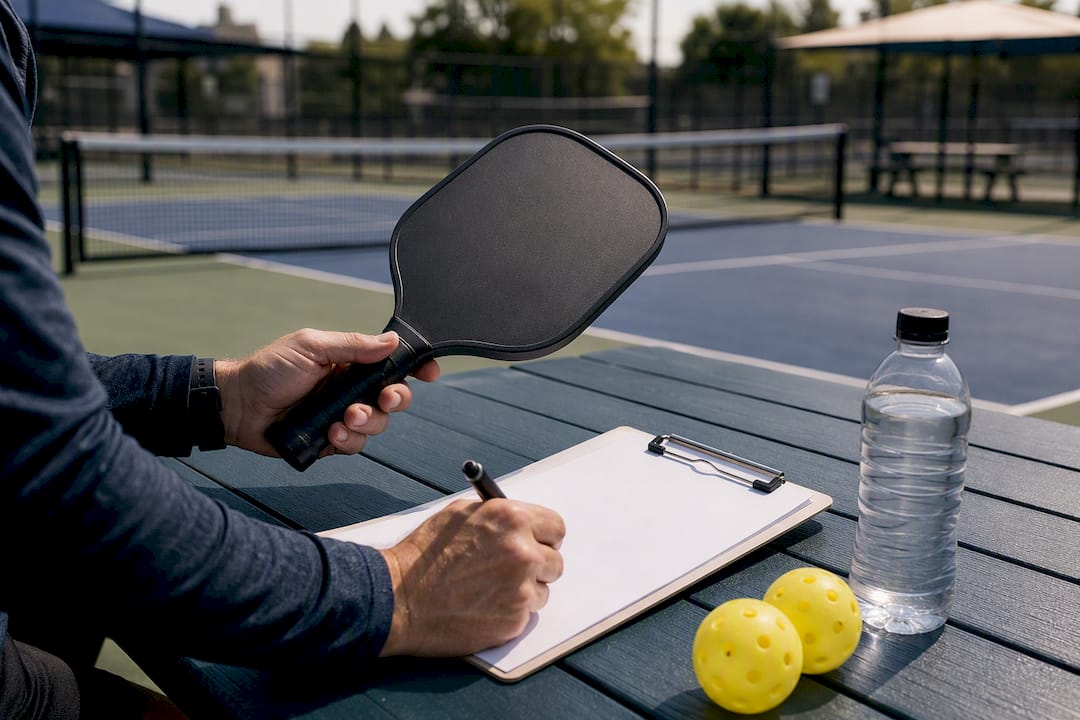
To join a team pickleball league fast, check a league directory like Pickleballteamleagues for options near you, then look for a regional affiliate such as a state team league or a Minor League Pickleball (MiLP) division in your area. Most of these leagues sort players into divisions using DUPR ratings, so check whether the league needs a full captain-registered roster or accepts individual sign-ups before you commit.
Here’s where most players actually land a spot:
- National team programs like MiLP, which run structured seasons with guaranteed matches and DUPR-based divisions.
- State or regional team leagues, such as those covering Florida or Texas, with published season calendars.
- League directories, which aggregate open registrations across cities and regions.
- Local or community team leagues, often tied to specific courts or parks departments.
Quick math: MiLP’s format guarantees four doubles games per match, so a captain fielding a four-player roster knows exactly how much court time the team gets every week, according to MiLP’s own program materials. If you don’t have a team yet, search your city on a directory, or look for a FleX-style individual entry point through a regional league page.
Key Takeaways
Joining a team pickleball league fastest means checking a directory or regional affiliate for open registration, confirming DUPR division rules, and registering as a captain or individual before the deadline closes.
| Point | Details |
|---|---|
| Start with a directory | Check PickleballTeamLeagues.com or a regional league page to see what’s currently open near you. |
| Confirm the registration type | Some leagues need a full captain-organized roster; others offer individual FleX-style entry. |
| Understand the match format | MiLP v4 runs four doubles games to 21 plus a Dreambreaker tiebreaker for ties. |
| Check DUPR placement carefully | Combined team DUPR can put a mismatched roster in a tougher division than expected. |
| Consider software if organizing | FlexLeague+ handles team registration, DUPR-based divisions, scheduling, and Stripe payments for new league organizers. |
Table of Contents
- Where To Look For A Team Pickleball League
- What Actually Happens In A Team Match
- How To Register For A Team Pickleball League This Season
- How To Pick The Right League For Your Season
- The Social Side Of Team Pickleball
- Running Your Own Team Pickleball League
- Sources
Where To Look For A Team Pickleball League
Finding the right league usually comes down to picking a category first, then narrowing by geography. Team pickleball splits into roughly four discovery channels, and each one serves a different kind of player.
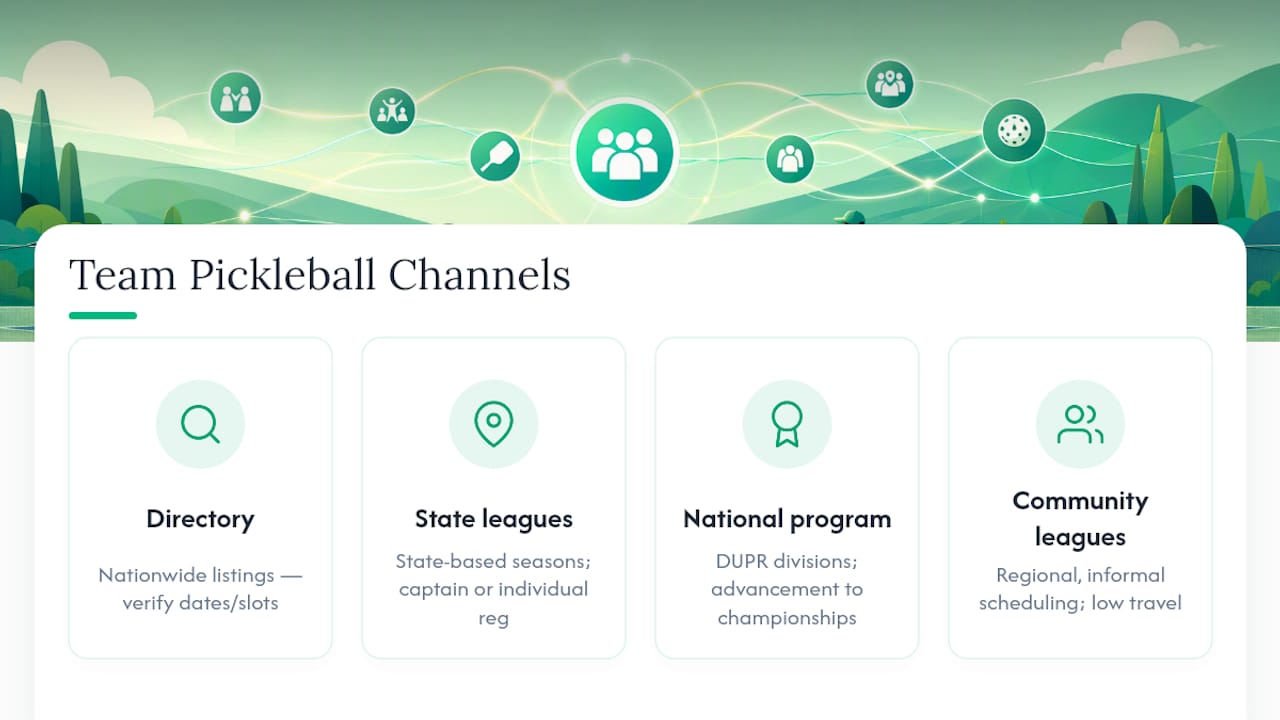
PickleballTeamLeagues.com functions as a directory rather than a league itself. It aggregates listings from around the country, which makes it a fast first stop if you’re not sure what’s running near you. The tradeoff: directory listings can lag behind a league’s own registration updates, so always confirm dates and open spots directly on the league’s site before you assume a season is open.
The Florida Team Pickleball League (FTPL) runs state-level team competition split across multiple regions, with published season dates and separate registration paths for captains and individual players. It’s a solid option if you’re in Florida and want a season with a defined start and end date rather than an open-ended ladder.
The Texas Team Pickleball League (TTPL) covers several Texas regions and offers both captain-only team registration and a “TeX FleX” option for players who don’t have a full roster lined up. That FleX option matters: it means a solo player can still get placed on a team without having to recruit three teammates first.
Minor League Pickleball (MiLP) is the closest thing to a national team program in this space. It organizes divisions by combined DUPR rating and builds in advancement pathways toward championship events, which appeals to players chasing something more competitive than a weekend rec league.
East Bay Team Pickleball, run through Community Pickleball, represents the community league end of the spectrum. It’s regionally focused, tends to run on more informal scheduling, and works well for players who want team competition without a heavy travel commitment.
Here’s how these stack up across the factors that actually affect your decision:
When you find a listing that looks promising, treat the directory version as a lead, not a confirmation. Click through to the league’s own page and check three things: the registration deadline, whether spots remain in your DUPR bracket, and whether the fee listed matches what you’ll actually pay at checkout. A surprising number of players lose a week of lead time by assuming a listing is current when the league already closed captain registration.
What Actually Happens In A Team Match
Team pickleball plays differently than the open-play or tournament format most players start with, and the format shapes almost everything about your season, from how much court time you get to how your captain sets lineups.
- MiLP v4 uses a four-player roster. Each team fields two men and two women (or a combined format depending on division), and a full match consists of four doubles games, each played to 21 points.
- If the match is tied after four games, MiLP resolves it with a Dreambreaker, a shortened tiebreaker game that decides the overall result, according to The Dink’s breakdown of the MiLP v4 format.
- Divisions are set by combined DUPR, meaning the league adds up (or averages) the ratings of your four-player roster to place your team in a bracket with comparable teams rather than ranking players individually.
- Lineup rules are fixed per match, so captains submit their doubles pairings before play starts rather than adjusting on the fly game to game.
Other formats vary quite a bit from that structure. TTPL’s TeX FleX and many community team leagues, including East Bay’s format, run shorter matches, sometimes best-of-11 or best-of-15 games rather than rally scoring to 21, and they tend to guarantee fewer total games per session. Season length also differs: MiLP builds toward playoff advancement, while a community league might just run a fixed number of weeks with standings but no championship bracket. Scoring itself follows the USAP Official Rulebook in nearly every sanctioned league, whether the match format is rally scoring to 21 or a shorter local variant.
Pro Tip: If you’re captaining a team under fixed lineup rules, pair your strongest combined-DUPR duo against the opponent’s likely toughest pairing in game one. Winning early tends to rattle the other team’s rotation and gives your weaker pairing a psychological cushion in games two and three.
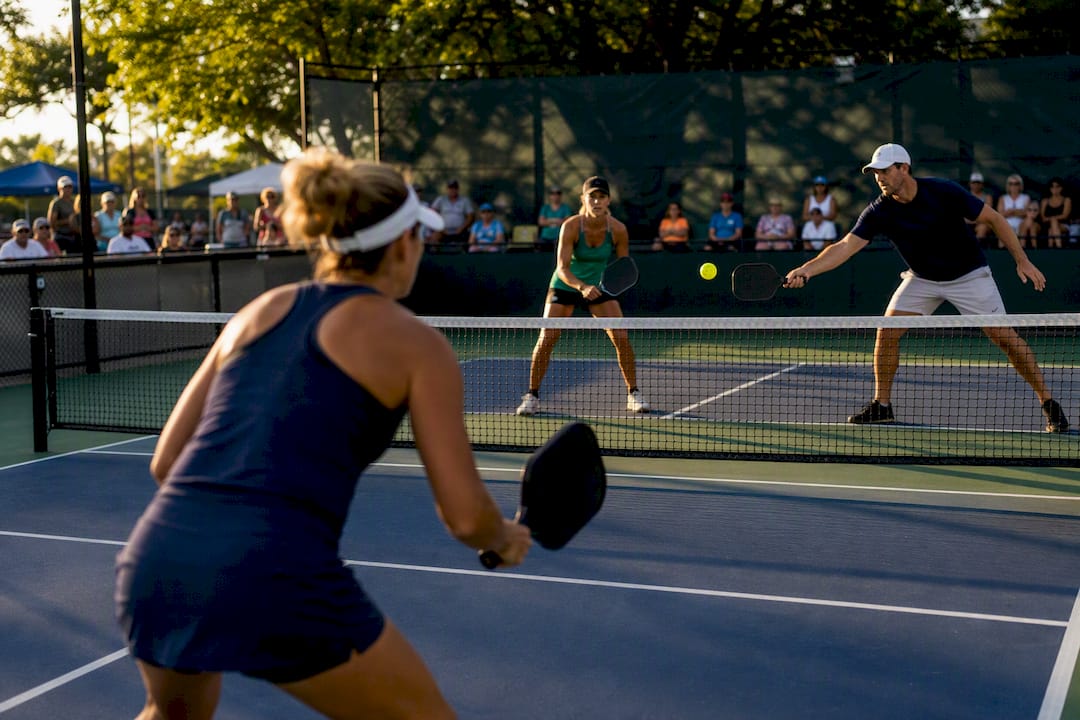
The appeal of MiLP’s four-games format is that nobody sits around waiting for a court. Every rostered player knows roughly how much time they’ll get on any given match night, which is a meaningful upgrade from open play, where court access depends entirely on how many people showed up and how fast lines move.
How To Register For A Team Pickleball League This Season
Getting registered looks different depending on whether you’re joining as an individual or organizing the team yourself. Both paths move fast once you know the order of operations.
If you’re a player without a team:
- Find a league listing through a directory or a regional league’s own site.
- Check the division and rating rules. Confirm whether the league uses individual DUPR or combined team DUPR for placement.
- Decide between joining as an individual (through a FleX-style option) or joining a captain’s existing roster if you already know a team looking for players.
- Register and pay through the league’s checkout, typically processed through a payment platform like Stripe.
- Show up on game day with your DUPR profile confirmed, appropriate paddle and shoes, and any team uniform requirement the league specifies.
If you’re organizing as a captain:
- Recruit or confirm your roster. Most team formats need at least four committed players.
- Calculate your team’s combined or average DUPR rating to estimate which division you’ll land in.
- Register as captain, which usually opens before individual sign-ups in leagues like FTPL and TTPL.
- Submit your full roster and pay the team registration fee by the league’s stated deadline.
- Set up a group text or shared calendar so your roster gets schedule updates without anyone missing a match.
A few practical notes worth knowing before you pay:
- Registration fees vary by league and format. Some city-run listings, like Sportskind’s Houston pickleball page, show separate pricing for team versus individual entries, which gives you a useful benchmark for what’s typical.
- Refund policies differ widely. Some leagues refund in full before a deadline and nothing after; others prorate based on how many weeks remain.
- Bring your DUPR ID, confirm your division placement in writing, and double check whether the league requires matching team shirts for check-in.
Payment processing through Stripe or a similar platform has become standard across most of these leagues, which means you’re rarely mailing a check or handing over cash at the courts anymore.
How To Pick The Right League For Your Season
Not every team league fits every player, and the wrong choice usually shows up as a scheduling headache three weeks in. Run through this before you register:
- Skill alignment: Does the league use DUPR to place teams, and does your combined roster rating actually match the division you’re eyeing?
- Schedule fit: Are match nights fixed, or does the league allow some flexibility for players with unpredictable work hours?
- Commute and location: Is the home facility actually reasonable for every player on your roster, not just you?
- Cost transparency: Does the league publish its fee structure upfront, including anything beyond the base registration?
- Communication: Does the league respond to questions before you pay, or does the contact page go quiet?
There’s a real tradeoff between competitiveness and flexibility. Higher-level leagues like MiLP’s advancement divisions tend to demand stricter lineup commitments and less tolerance for no-shows. FleX-style leagues, by contrast, trade some of that competitive intensity for scheduling freedom, which suits players juggling inconsistent availability.
Watch for red flags before you hand over a card number: no published schedule, vague or missing refund terms, or a league that can’t answer a basic question about divisions within a day or two. Ask directly how substitutions work if a rostered player can’t make a match, and ask what happens to your fee if the season gets canceled partway through.
Pro Tip: Email or message a league before registering and ask one specific question, like how lineup substitutions work mid season. A fast, clear answer tells you more about how the league is run than anything on its homepage.
The Social Side Of Team Pickleball
Team leagues build community in a way open play rarely does, mostly because you’re showing up with the same three or four people every week instead of rotating through strangers. That repetition turns into actual friendships fairly quickly, especially in community-based leagues like East Bay Team Pickleball, where post-match socializing is often part of the culture.

Captains frequently organize group dinners after matches, and many regional leagues run season-ending mixers or awards nights that bring multiple teams together. Some players join a team league specifically for this reason. It’s a built-in way to meet people at a similar skill level without the awkwardness of finding partners at open play.
State-level leagues like FTPL and TTPL also create a layer of regional community, since teams from different cities end up competing against each other over a season and sometimes at a shared championship event. That cross-city contact tends to expand a player’s network well beyond their home court, which matters if you travel for work or move cities and want to plug into a new pickleball scene quickly.
Why Team Formats Speed Up Improvement
Guaranteed matches change how fast you improve, plain and simple. When you know you’re getting four games every week regardless of how a night shakes out, you start treating each game as a lesson rather than a fight for limited court time. Team tactics, communication with a fixed partner, lineup strategy, also force you to think about the game structurally instead of just reacting point to point.
The most common mistake I see newcomers make is misjudging their combined DUPR placement. A team stacked with one strong player and three newer players can land in a division that’s brutal for the weaker three, even though the average looked fine on paper. Underestimating lineup strategy is the second big one. Captains who treat every match like a coin flip on pairings tend to lose winnable matches.
One organizer habit worth stealing: communicate schedule changes early and in writing. A single missed text about a rescheduled match night is the fastest way to rack up an avoidable forfeit.
Running Your Own Team Pickleball League
If reading through FTPL, TTPL, and MiLP has you thinking about starting a division in your own city, running it well comes down to handling three things: registration, scheduling, and payments, without turning it into a second job.
FlexLeague+ is built specifically for that job. Organizers use it to register teams and individuals, handle combined DUPR calculations automatically, build live standings and playoff brackets, and collect registration fees through Stripe without chasing anyone down for a check.
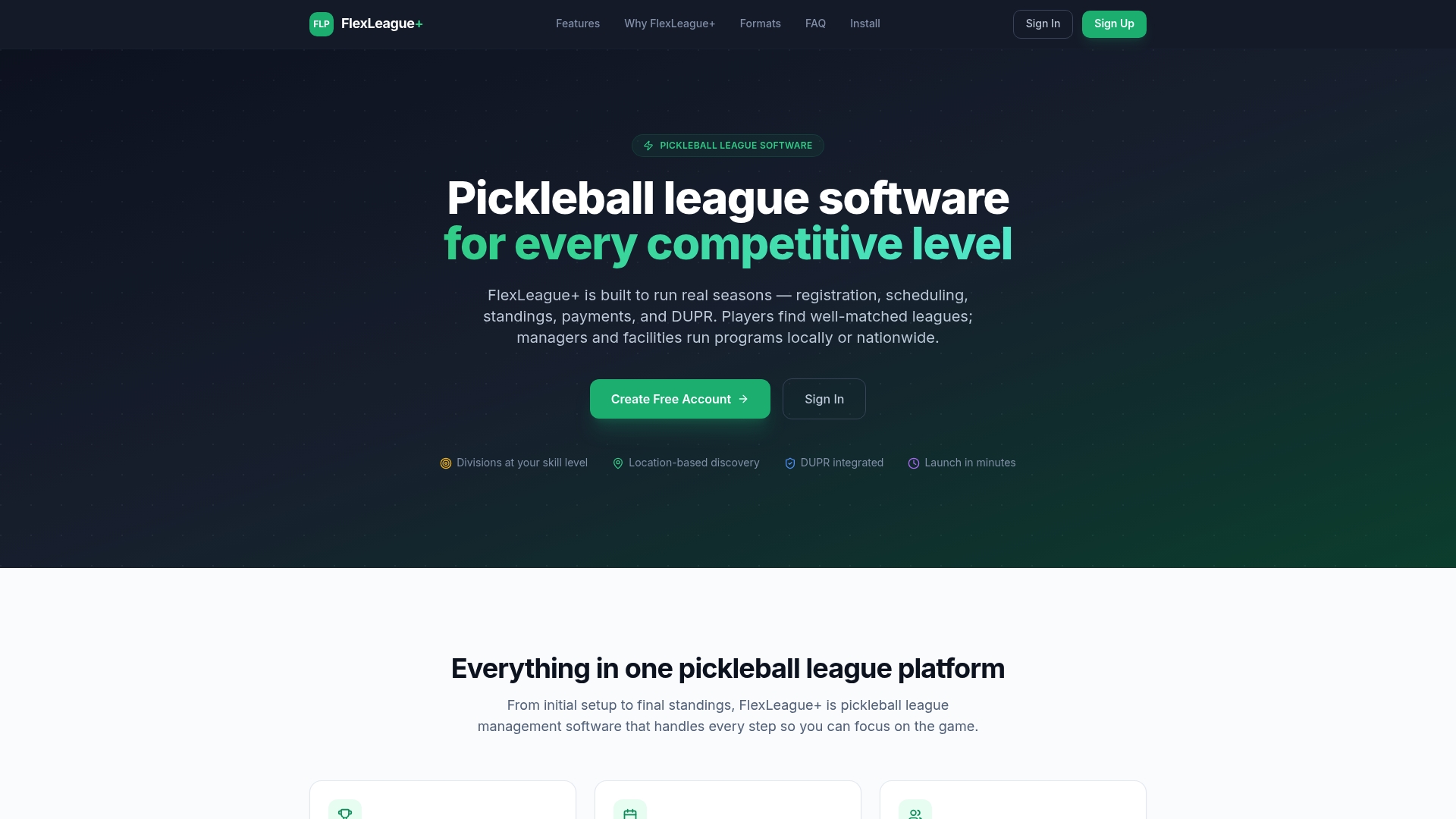
Where it actually saves time: automated scheduling means you’re not manually building match nights by hand every week, and DUPR integration means you’re not eyeballing combined ratings to guess at divisions. That combination matters most when you’re launching a brand-new city division and need score reporting to work correctly from week one, since a bad first season is hard to recover from. If you’re weighing whether to start a team pickleball division from scratch, take a look at FlexLeague+'s league software and see whether it fits how you want to run your season.
Sources
- USAP Official Rulebook
- The Dink — The Dink MiLP v4: How the format works
- Minor League Pickleball (DUPR)